Nikos Engonopoulos, À Revoir: Theophilos — Theophilos as Poetic and Visual Memory
Nikos Engonopoulos
Theophilos Hatzimihail
À Revoir Theophilos
Greek Surrealism
Modern Greek Poetry
Folk Painting
Visual Sources
Ekphrasis
Intermediality
Art and Literature
Note to the reader
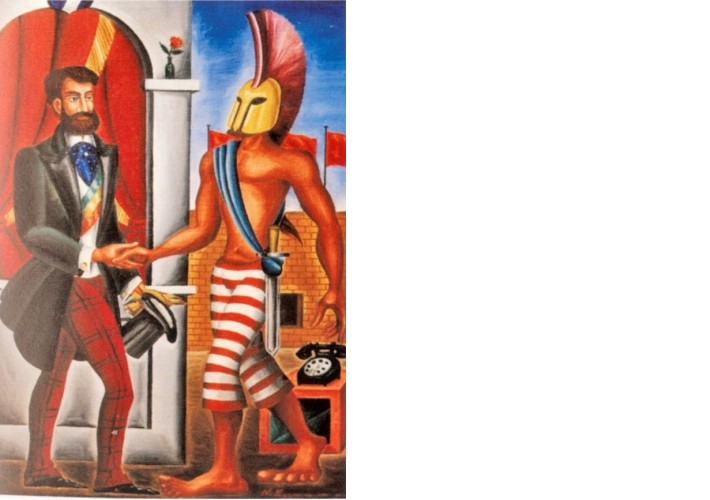
The visual material that follows attempts to shed light on the close relationship between the poetic word and the visual source, complementing the epigraph of the publication À Revoir: Theophilos by Nikos Engonopoulos (Editing – Afterword: Elisavet Arseniou, Ypsilon, 2025). Its purpose is not to function as a simple illustration of the poem, but to reconstruct the visual universe that Engonopoulos activates as he recalls the form and work of Theophilos Hatzimichael. The works that Quotes allow the reader to follow the transition from image to poetic discourse and discern the way in which the poet transforms painting subjects, historical figures, folk myths and cultural memories into poetry.
The icons do not come exclusively from the work of Theophilos. Also included are documents of popular visual culture, historical publications, chromolithographs, works by Nikos Engonopoulos and other creators, which contribute to the understanding of visual patterns, possible sources or the later reception of the themes encountered in the poem. The numbers that accompany the sections refer to the corresponding verses of the poem. The correlations proposed are sometimes based on documented correspondences and sometimes on interpretative hypotheses, which aim not at a definitive interpretation but at highlighting the complex dialogue between Theophilos' painting and Engonopoulos' poetics.
The correlations proposed here are not the only possible ones. The poem remains open to new readings and new connections. The images gathered in the following pages aspire to serve as an occasion for each reader to seek other forms, works and paths that may illuminate the world of Theophilos and Engonopoulos. Through this visual path, one of the most essential characteristics of À Revoir emerges: Theophilos: that it is not only a tribute to the folk painter, but also a poetic reconstruction of the history, myths and images that made up his world.